
Seasonal allergies can put a serious damper on your energy and mood when all you want is to enjoy the outdoors. While allergy meds and staying indoors with the windows shut are common strategies, tweaking your diet can also help your body handle those irritating symptoms. I’m sharing what’s worked for me and what’s backed up by research, so you can make some smart changes in your kitchen to help with seasonal allergies.
How Diet Plays a Role in Seasonal Allergies
Your immune system reacts to pollen and other triggers during allergy season, and that’s what causes itchy eyes, runny noses, and sneezing. What you eat can actually influence your immune response. Some foods help lower inflammation and support your immune system, making allergic reactions less harsh. Others might make things worse, so it pays to pay a little extra attention to your regular meals.
There is a lot of research suggesting gut health is tied to allergies. When your gut is in good shape, your body is often less likely to overreact to outside allergens. By focusing on foods that feed the healthy bacteria in your gut, you can build some much needed “defense” before allergy season even starts. Your overall digestive health links right back to how your body responds to histamines and inflammation, so including more fiber and fermented foods is an easy win.
Smart Foods to Add for Allergy Support
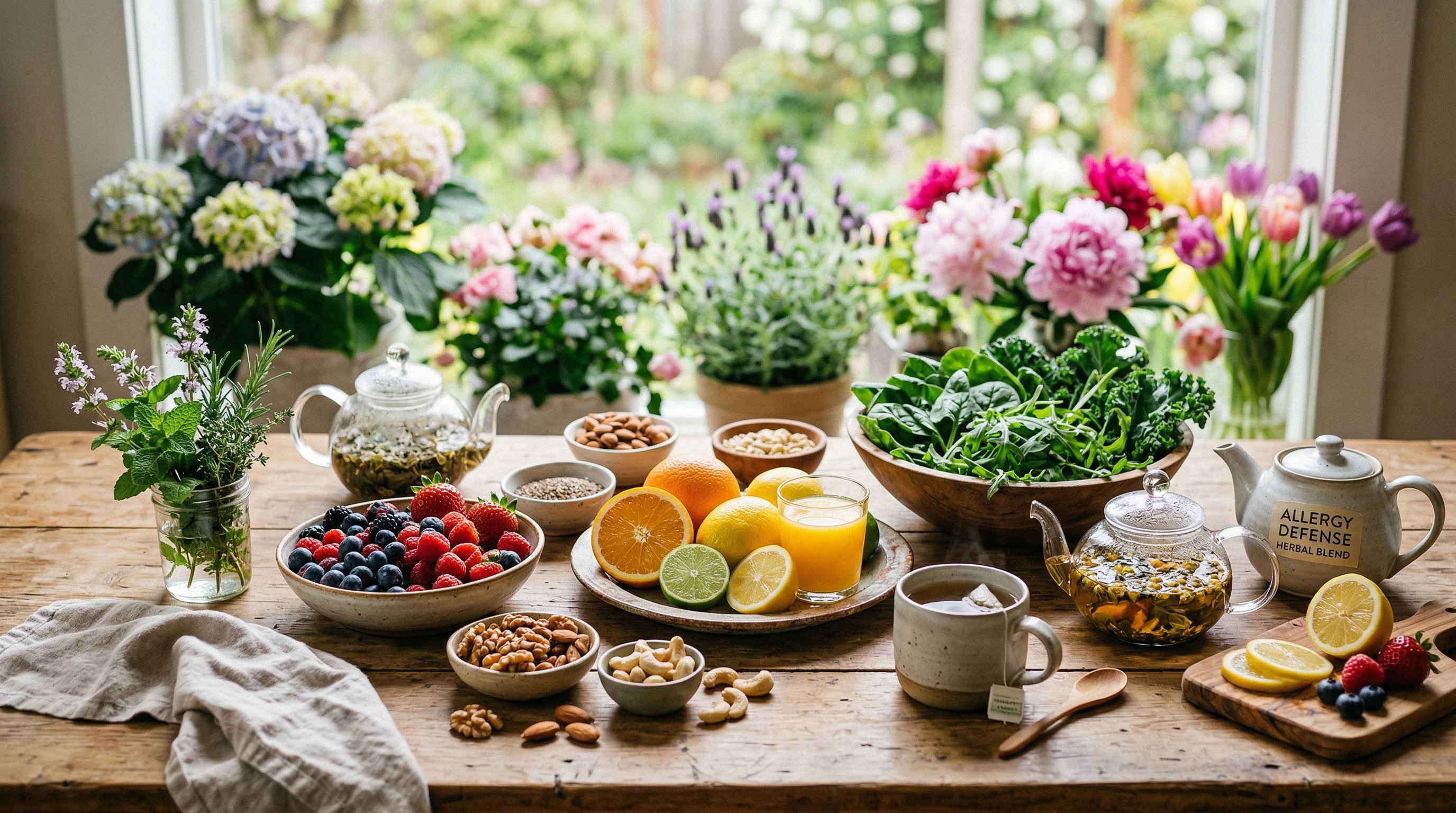
Eating an array of colorful, plantforward meals is a great start. Here are some foods I keep in my rotation, especially when the pollen count spikes:
- Fresh fruits and veggies: Berries, grapes, apples, oranges, broccoli, spinach, and carrots are loaded with antioxidants. These help calm inflammation in your body and give your immune health a boost.
- Healthy fats: Salmon, walnuts, chia seeds, and flaxseeds provide omega3 fatty acids, which are super useful for keeping inflammation levels lower.
- Spices and herbs: Turmeric and ginger are known for their antiinflammatory properties. I like to toss sliced ginger into my tea or add turmeric to stirfries and soups for a nourishing boost.
- Onions and garlic: Both contain quercetin, a natural antihistamine. I actually enjoy adding raw onion or a bit of crushed garlic to salads. Just be sure to give your teeth a brush afterward!
- Probioticrich foods: Yogurt with live cultures, kefir, kimchi, sauerkraut, and miso help keep your gut bacteria happy, which matters a lot for immune balance.
Adding variety within these food categories is smart. For example, rotating your greens (kale, arugula, spinach) and berries (blueberries, strawberries) increases the types of antioxidants you get. Swapping in other probioticrich picks—like tempeh or pickles—can help keep things interesting and flavorful.
Foods and Habits to Limit If You Have Allergies
Some foods might actually make allergy symptoms worse for certain people. Here’s what to be careful with:
- Highly processed foods: Fast food, sugary snacks, and sodas can promote inflammation. If you’re already battling a sneezing fit, these might make you feel even rougher.
- Alcohol: Wine and beer contain histamines, which can mimic or worsen allergy symptoms.
- Dairy: While not everyone has a problem, some people find dairy increases mucus production. If you notice more congestion after cheese or milk, try skipping it for a week to check how you feel.
- Spicy foods: Some spices might trigger a runny nose, which isn’t always ideal in allergy season.
Paying attention to how you feel after eating specific foods is a pretty handy way to figure out if something isn’t agreeing with your body during allergy season. Keeping a food and symptom journal can clue you in on patterns you might not spot right away.
Supplements That May Help
If you’re looking to add something extra, there are a few supplements and natural remedies worth checking out. Of course, it’s always a good idea to ask your doctor before adding any new supplement to your routine:
- Probiotics: These not only help the gut but may also lower the risk of allergies in the long run.
- Quercetin: Naturally found in some fruits and veggies, this is also available as a supplement. Quercetin acts as a natural antihistamine, which could bring you a little relief.
- Fish oil or algaebased omega3 supplements: These help overall inflammation in the body.
- Local honey: Studies are mixed, but some people swear by a spoonful of local honey daily, thinking it can slowly help your body adapt to local pollen. It’s not a cure, but adding honey to tea or oatmeal is delicious either way.
- Vitamin C: Found in oranges, kiwis, bell peppers, and as a supplement. This antioxidant supports immunity and can help lower histamine levels.
Basic Diet Tips for the AllergyProne
Building daily habits makes a difference over time. Here are a few things I try to stick with, especially during allergy seasons in spring and fall:
- Drink plenty of water: Staying hydrated helps thin mucus and encourages your body to flush out allergens more easily.
- Aim for whole, unprocessed foods most of the time: These keep your immune system in better shape and support that allergy defense.
- Watch for oral allergy syndrome: Sometimes, people react to certain raw fruits and veggies that crossreact with pollen (like apples and birch pollen). If raw apples or carrots make your mouth itchy, cooking them can help.
- Meal prep: Having healthy options ready makes it easier to avoid reaching for processed snacks when you’re tired from allergies.
- Add fermented foods consistently: Fermented foods, even in small amounts, support gut balance and immune health. Try a tablespoon of sauerkraut or kimchi with lunch or dinner.
Common Questions About Diet and Allergies
Over the years, I’ve gotten a lot of the same questions from friends, so here are some quick answers if you’re just starting to check into this stuff:
Can eating certain foods actually prevent allergies?
Eating well probably won’t stop allergies altogether, but it can make symptoms less intense. Think of it as helping your body cope better when pollen is high.
How long before diet changes help with allergies?
It usually takes a few weeks to notice real changes. Your gut and immune system need time to adjust, so stick with the changes through the whole season to give your body a solid chance at improvement.
Are there foods that work instantly?
Not really; unlike allergy meds, most allergyfriendly foods support your body gradually. But staying hydrated and eating foods that calm inflammation may help you feel better overall, especially if you stay consistent.
Is local honey legit for allergies?
The science is mixed, but some folks find it useful. It’s probably not a miracle fix, but it won’t hurt to add small amounts to your breakfast or tea, and you might stumble upon a bit of relief while supporting local beekeepers.
Troubleshooting: What If Diet Changes Don’t Help?
No diet is a magic wand; sometimes allergies are just strong, and you still need medication or air filtration at home. Here are some extra steps I turn to if food alone isn’t doing enough:
- Use a HEPA air purifier at home to lower pollen and dust indoors.
- Take a shower and change clothes after outdoor activities.
- Consider talking to an allergist about allergy testing and customized treatment if you’re
RealLife Example: How a Diet Change Helped Me
I used to dread springtime because of allergies. When I started swapping out my morning bagel for a smoothie loaded with spinach, frozen berries, and a scoop of yogurt, I noticed my symptoms weren’t as bad. Adding more ginger and turmeric to my meals also seemed to help, and drinking water all day keeps that heavy, groggy feeling away. Everyone’s body is a bit different, but simple swaps like these gave me a noticeable boost.
Takeaway: Building an AllergyFriendly Diet
Building a diet that supports your immune health gives your body a better shot at handling seasonal allergies. There’s no single solution, but making some thoughtful changes to what’s in your kitchen and daily meals can really make a difference in how you feel all season long.
If you’re curious about specific supplements or need quicker relief, you might want to try an allergy relief option or read up on specialized solutions for ear and sinus discomfort. Making a few swaps and tweaks today can help you get outside and enjoy allergy season a little more.